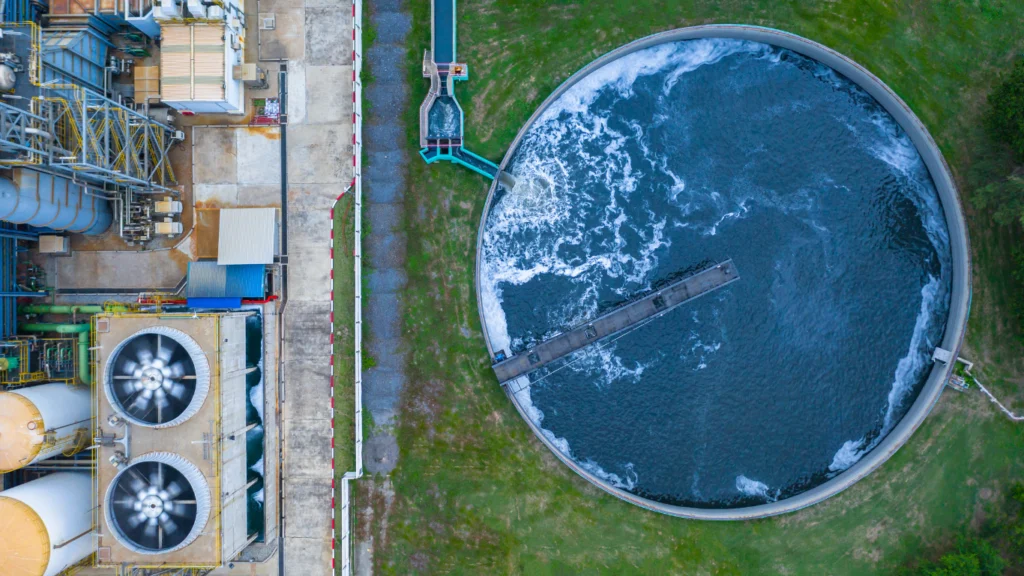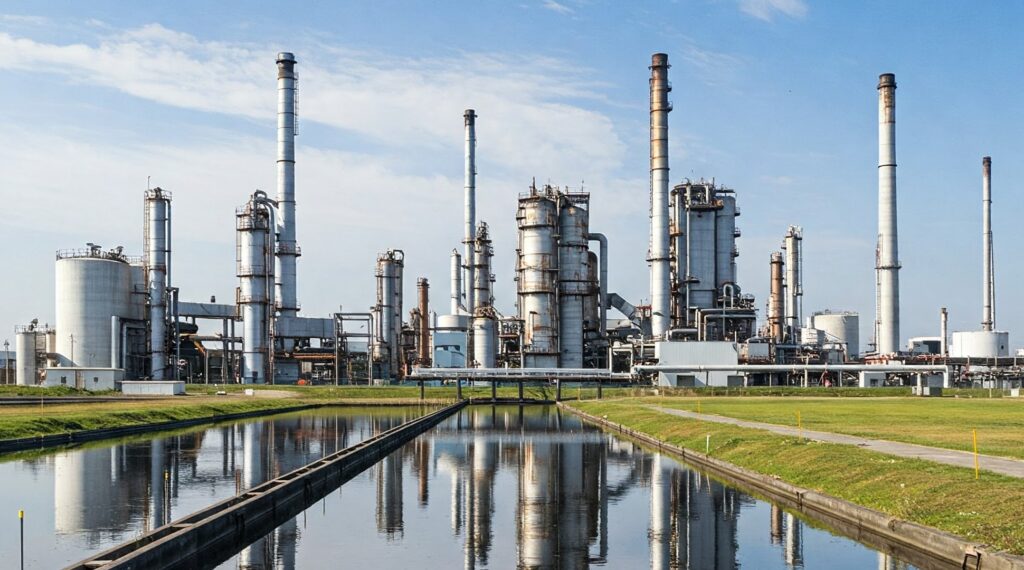

Water is the lifeblood of semiconductor fabrication – used to cool systems, generate power, and especially to rinse and clean silicon wafers. It must be ultrapure (thousands of times cleaner than drinking water so even tiny impurities won’t ruin the chips. Achieving ultrapure water is expensive: it takes roughly 1,400–1,600 gallons of tap water to make 1,000 gallons of ultrapure water.
Many new facilities are being built in water-stressed regions (Taiwan, South Korea, parts of the U.S. etc.), so there is huge pressure to reuse and save water for semiconductor wastewater treatment. For example, TSMC plans a recycling plant in Arizona to reuse 65% of its fab water, and by 2030 TSMC aims to draw over 60% of fab water from reclaimed sources. Likewise, SK Hynix aims to triple its reuse rate by 2030. These moves make water treatment and recycling not just a “nice-to-have,” but a must-have for chip makers.
What’s in the Waste? Contaminants and Risks
Manufacturing chips generates lots of dirty water. Rinsing, etching and cleaning steps dump acids, solvents and metals into the waste stream. For example, wafer etching uses strong acids (like sulfuric and hydrofluoric acid), polish steps shed silica particles, and strippers wash away organics. A typical 12-inch wafer can generate ~10 m³ of wastewater containing about 3.5 kg of ammonia (NH₄⁺), 1.0 kg of organic bases (like TMAH), a few dozen grams of precious metals, and 100 g of silicon oxide solids. In short, chip wastewater can contain heavy metals, toxic chemicals, and even “forever” chemicals:
- Acids and alkalis. Processes use hydrofluoric, nitric and sulfuric acids, and some alkaline cleaners. In fact, HF acid waste accounts for over 40% of the industry’s hazardous waste, so it must be treated very carefully.
- Metals and salts. Waste streams often carry dissolved metals (copper, arsenic, antimony, etc.) and salts. Silicon wafers shed minute oxide particles (silica) during polishing. These solids and salts can clog filters and form scales if not removed.
- Ammonia and organics. Cleaning chemicals (like TMAH or ammonia cleaners) end up in the water. Removing them is hard because they mix so well.
- Organic solvents. Spent developers and photoresists introduce organics that need special treatment.
- PFAS (“forever chemicals”). Some etchants and films use PFAS, which resist breakdown. Regulators now target PFAS heavily, so fabs are rushing to capture and destroy these chemicals to avoid fines.
This toxic mix of chemicals makes the wastewater a serious environmental concern. Untreated effluent can harm aquatic life and public health, so governments set very strict discharge limits. The industry is under pressure (and even litigation risk) to cut pollutants and return clean water.
Recycling and Reuse Strategies for Semiconductor Wastewater treatment
To handle these challenges, chipmakers are putting waste water through multiple stages of treatment and reuse. The goal is to recover as much water as possible for reuse in the fab, reducing the need to pull fresh water and the volume of pollutants released. Today’s strategy follows the “3Rs” principle: reduce, reuse, and recycle water.
- Segregating streams. Instead of mixing all wastewater together, fabs now split effluent into many categories based on chemistry. For instance, TSMC classifies its waste into dozens of streams so each can get the right treatments. (TSMC grew from 10 categories in 2001 to 38 categories today.) Low-strength rinse water is reused immediately, while stronger acid or base streams get tougher treatment.
- Multi-stage treatment. Waste streams are first cleaned of large particles and neutralized. Then advanced steps remove dissolved stuff. For example, high-value compounds like ammonium are often recovered as chemicals (e.g. making ammonium sulfate fertilizer). Heavy solids can be filtered or settled out before further treatment.
- Water reclamation. Treated water often loops back into the process. One approach is to send recycled water into the ultrapure water (UPW) systems that feed wafer cleaning. Modern fabs sometimes pre-filter or polish wastewater so it can be fed to the UPW trains.
- Reuse of non-traditional sources. Companies even tap unconventional sources. Samsung signed a deal to treat municipal sewage for fab use – up to 400,000 tons per day (about 1.5 billion tons per year) of reclaimed water. They use membrane filters to clean this water before it can enter their facilities.
These efforts pay off. For example, TSMC built a world-first reclaimed water plant that began operating in 2022. It supplies about 10,000 m³/day of recycled industrial water to its fabs. By 2026 that plant will grow to 36,000 m³/day. TSMC even plans for new fans to use 100% reclaimed water, aiming to replace over 60% of its freshwater with recycled sources by 2030. SK Hynix similarly targets reusing three times its 2019 water volume by 2030. Intel has been doing on-site recycling for years to – its new Oregon fab (Ronler Acres) installed a full zero-liquid discharge (ZLD) wastewater plant, helping Intel reach “net positive” water status by 2022.
Zero Liquid Discharge (ZLD) Systems
When regulations tighten (especially on PFAS and other tough pollutants), many semiconductor factories now consider Zero Liquid Discharge systems. A ZLD plant is designed so no wastewater ever leaves as liquid – all water is cleaned and reused, and only solids remain for disposal. In practice, this means treating the water up through evaporation and crystallization.
ZLD was once seen as too expensive for most industries, but trends are changing. The semiconductor industry is among the early adopters now because the cost of water and the cost of non-compliance are both rising. Companies implementing ZLD must stack technologies – membranes, ion exchange and other pretreatments remove most dissolved stuff, then thermal units (evaporators and crystallizers) boil off the rest. The condensed steam returns as pure water, and what’s left is a concentrated brine that eventually turns into solid salts.
ZLD helps fabs meet strict discharge laws and recover valuable materials. As Wikipedia notes, ZLD plants “produce solid waste” while recovering clean water for reuse. In chips, this can mean reclaiming chemicals like potassium, lithium or salts for reuse. At Intel’s Ronler Acres fab, their new ZLD wastewater plant recycled 2.4 billion gallons in 2020 alone, dramatically cutting the fab’s total water needs. Intel’s example shows that even very large fabs can become “net positive” (giving back more water than they take) by using ZLD.
However, ZLD does have challenges. It is energy-intensive and complex. For example, scaling (mineral deposits) can foul evaporator tubes when the water is heated. Some vendors have addressed this – one company built a self-cleaning evaporator that periodically clears silica scale, boosting efficiency. In general, fabs often push ZLD to the limit by squeezing maximum water out of membranes before going thermal. Studies show that treating the first 90% of water is relatively cheap, but the last 9–10% (typical ZLD region) can cost double. As a result, many fabs pursue “minimum liquid discharge (MLD)” approaches for a compromise, but high water prices and regulations are making full ZLD more common.
Key Treatment Technologies (Explained Simply)
To understand these solutions, it helps to break down the main technologies – in plain terms:
Membrane filtration (Reverse Osmosis)
Imagine water flowing under pressure through a very fine sieve that only lets water molecules pass. Reverse osmosis (RO) works like that: contaminated water is forced through semi-permeable membranes that block salts and dissolved impurities. The outcome is very pure water on one side and a concentrated brine on the other. Samsung explains it simply: “membranes have extremely tiny pores, allowing water molecules to pass while filtering out larger substances such as minerals, microbes, and impurities”. RO is a workhorse in fabs – it typically follows initial screening and neutralization steps. However, RO has its limits: as the water gets saltier, the pressure needed goes up. In practice, RO systems top out around ~80 bars. Once the water’s salinity pushes that limit, the remaining brine must go to evaporation.
Evaporation & Crystallization
This is basically boiling off water. In an evaporator or crystallizer, the wastewater is heated (or subjected to vacuum) so that water turns to vapor, leaving behind nearly all the dissolved solids. The steam is then condensed back into pure water. Think of it like a distillation column: the water leaves, solids stay. As one industry source puts it, “during evaporation, a portion of the water is vaporized, leaving behind a saline liquor that contains virtually all of the dissolved solids”.Multi-stage effects or mechanical compressors can reuse energy to improve efficiency, but energy use is still high. Any minerals or chemicals in the waste (like gypsum, lithium, etc.) will crystallize and drop out. This is why ZLD plants end with a filter press or centrifuge to remove and dry the solids before final disposal.
Scale control (Scaleban)
Cooling towers often need fresh water makeup because high-mineral water can quickly form scale (mineral deposits) in heat exchangers. Scaleban is a special cooling-water treatment system that prevents scale buildup even when using recycled water. The Scaleban system includes a small inline device plus treatment chemicals that condition the water. In effect, it lets fabs use treated wastewater (such as ETP effluent or RO reject) as cooling tower makeup without fouling the pipes. Cooling towers can then operate at much higher concentration levels (for example, cycles of concentration of 15–20) with very high total dissolved solids, yet remain scale-free and corrosion-free. This means the tower blows down far less water and essentially needs no fresh make-up water, helping fabs recycle water in cooling loops rather than discharging it.
Ion Exchange & Polishing
Often used in the final cleanup, ion exchange resins act like sponges that swap out unwanted ions (e.g. chloride, ammonia, metals) for benign ones (often hydrogen or hydroxide). After RO and evaporation, ion exchange towers can polish the water to ultrapure levels. It’s similar to the deionization used in home water filters, but industrial scale. This is not always called out in discussions, but most fab water systems include ultra-pure polishing to hit extremely low impurity targets.
The goal is to send zero liquid out the gate. In many fabs that have added these systems, the only output is solid salt cakes that are often sent off for recycling or safe landfill.
A Cleaner Future for Chips
The semiconductor industry’s thirst shows no sign of abating – GPUs, 5G, AI and more all need more chips. But water is finite and regulations are tightening, so managing wastewater has become a key strategic issue. Through a combination of process tweaks, advanced filtration and full ZLD systems, chipmakers are closing the loop on their water. The result is twofold: less environmental impact and greater water security for fabs.
In summary, fabs now use membranes and filters to strip out contaminants, then boil away the rest to leave nearly solid waste. Real examples – from Intel’s ground-breaking ZLD plant to TSMC’s giant recycling pools – show this work. By recycling water in every way possible, the industry moves towards sustainability. The tiny chips inside our phones may still require massive volumes of ultrapure water, but the water itself increasingly never truly “disappears” down the drain.
Innovations like “SCALEBAN” push this even further. Scaleban’s cooling-water treatment makes it possible to reuse high-TDS wastewater in towers with no scale or corrosion. In practice, this means cooling towers need no fresh makeup water, and blowdown is cut by about 90%, while heat exchangers remain scale-free. The process requires no added energy (so CO₂ emissions are lower) and aligns with UN Sustainable Development Goals on water and climate (SDGs 6, 7, 13 and 14). By enabling scale-free, low-carbon recycling, Scaleban helps fabs reach true zero-liquid-discharge and meet their sustainable water reuse targets.
Overall, treating water as a resource — and deploying technologies like Scaleban alongside membranes, evaporators, and ZLD systems — is helping the chip industry become more water-efficient and environmentally sustainable.