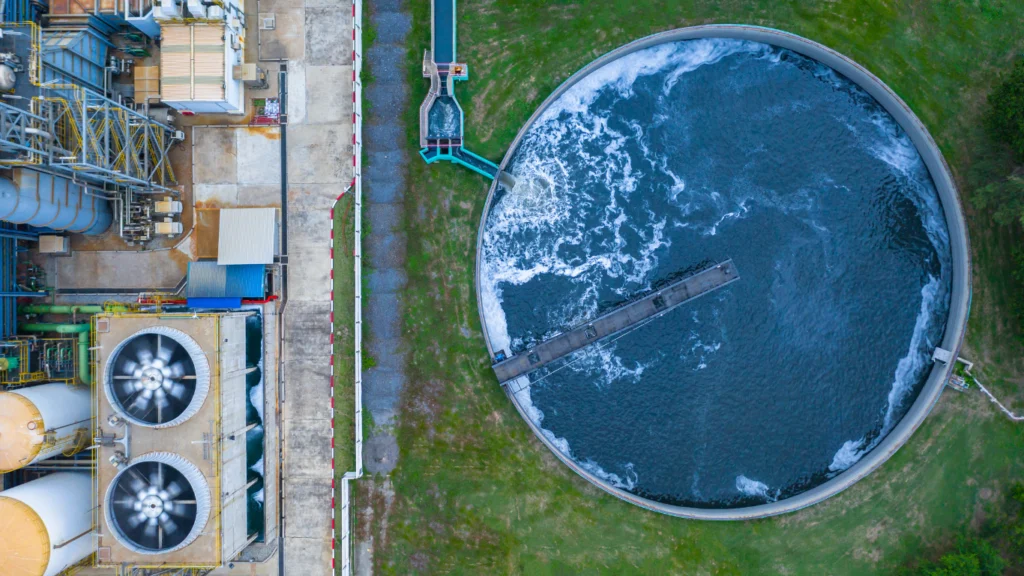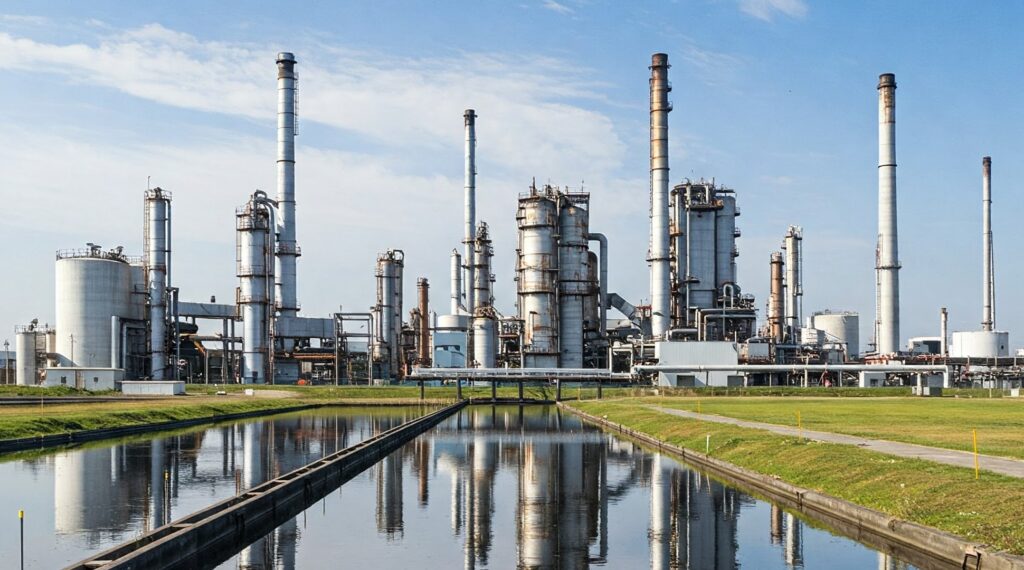

Industries use large amounts of water every day, for cooling, cleaning, and manufacturing. But once used, this water turns into wastewater, often full of chemicals, salts, and heavy metals.
If not treated properly, this wastewater ends up in rivers, lakes, or underground, polluting our environment. It harms aquatic life, degrades soil, and affects the health of nearby communities.
Industries need a better way to deal with wastewater and ZLD offers just that.
ZLD is a wastewater treatment approach that ensures no liquid waste is discharged from an industrial facility. It’s a smart and sustainable way to manage industrial effluents.
How Zero Liquid Discharge Helps Industries Reduce Environmental Impact
In today’s world, industries face increasing pressure regarding their environmental responsibility. One of the most significant challenges is managing wastewater effectively and minimizing its impact on precious water resources and ecosystems.
Here is exactly the role Zero Liquid Discharge (ZLD) comes into action, a revolutionary approach that’s helping industries drastically reduce their environmental impact. But how exactly does it work, and what are the tangible benefits? Let’s explore.
Understanding the Environmental Burden of Industrial Wastewater
Traditional wastewater management often involves discharging treated or partially treated effluent into water bodies. While regulations exist, this practice can still lead to several environmental problems:
- Water Pollution: Discharge can introduce harmful pollutants, heavy metals, and chemicals into rivers, lakes, and oceans, disrupting aquatic life and potentially contaminating drinking water sources.
- Resource Depletion: Industries consume vast amounts of freshwater for various processes. Discharging this water as waste contributes to the depletion of this vital natural resource, especially in water-stressed regions.
- Soil Contamination: Improper disposal of sludge from wastewater treatment can contaminate soil and groundwater.
- Ecosystem Damage: Polluted water can severely damage aquatic ecosystems, leading to loss of biodiversity and disruption of natural food chains.
The Zero Liquid Discharge Solution
ZLD is an advanced wastewater treatment technology that aims to eliminate liquid waste discharge from industrial processes. Instead of releasing treated effluent, ZLD systems recover and reuse virtually all the water, leaving behind solid waste, typically in the form of concentrated salts. This is achieved through a combination of various treatment processes, which can include:
Smarter ZLD for Sustainable Industries
While traditional ZLD systems rely on reverse osmosis (RO) and energy-intensive evaporators, Scaleban takes a smarter and simpler approach. It’s a non-conventional industrial wastewater treatment solution that helps industries achieve Zero Liquid Discharge without high energy use or complex infrastructure. Instead of removing dissolved solids through RO and evaporation, Scaleban uses a unique chemical treatment that prevents scaling, corrosion, and biofouling—even at very high TDS levels. This allows industries to safely reuse wastewater in cooling towers and other processes, drastically reducing freshwater intake and wastewater generation. With Scaleban, ZLD becomes more practical, more sustainable, and far more affordable for modern industries.
Scaleban’s Environmental and Economic Benefits
- Zero discharge, zero energy waste: Eliminates the need for RO and MEE, cutting down energy consumption drastically.
- 80% lower CAPEX and OPEX: Reduces infrastructure and operational costs with a fast ROI (12–18 months).
- Zero scaling and fouling: Ensures long-term system stability and reduces maintenance.
- High water recovery: Enables >95% water reuse within industrial systems, minimizing freshwater intake.
- Low carbon footprint: No energy-intensive evaporation = fewer greenhouse gas emissions.
- Supports SDGs: Contributes directly to United Nations Sustainable Development Goals (SDG 6, 9, 12, and 13).
Real-World Impact of ZLD with Scaleban
SCALEBAN is not just a theoretical improvement, it’s delivering measurable results across multiple industries.
In real-world industrial setups, Scaleban has helped achieve over 95% water recovery while eliminating liquid discharge entirely. By preventing scale and corrosion even at extreme TDS levels, it enables facilities to reuse wastewater directly in cooling towers, boilers, or process lines, something that conventional ZLD systems struggle with due to fouling and high operational complexity.
Whether it’s a power plant managing cooling tower blowdown or a textile unit recycling dye-house effluent, Scaleban’s plug-and-play solution integrates easily and performs consistently, even under harsh water conditions.
Conclusion: The Future of ZLD Is Here
Zero Liquid Discharge is more than just a wastewater treatment technology; it’s a paradigm shift towards a more sustainable industrial future. But traditional ZLD comes with trade-offs: high costs, high energy use, and complex systems.
Scaleban is redefining what ZLD can be. It takes all the environmental benefits industries expect like water reuse and zero discharge and delivers them without the usual trade-offs of high cost, complex systems, or heavy energy use.
If your goal is to shrink your environmental footprint, cut down on water bills, and simplify your operations, SCALEBAN is the smarter way forward. It’s clean, efficient, and built for the realities of modern industry.