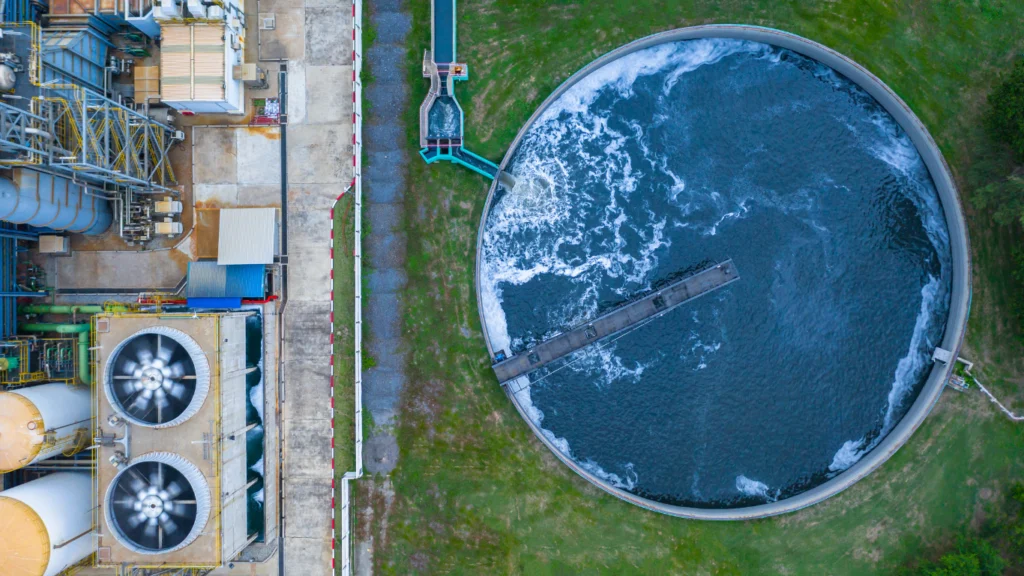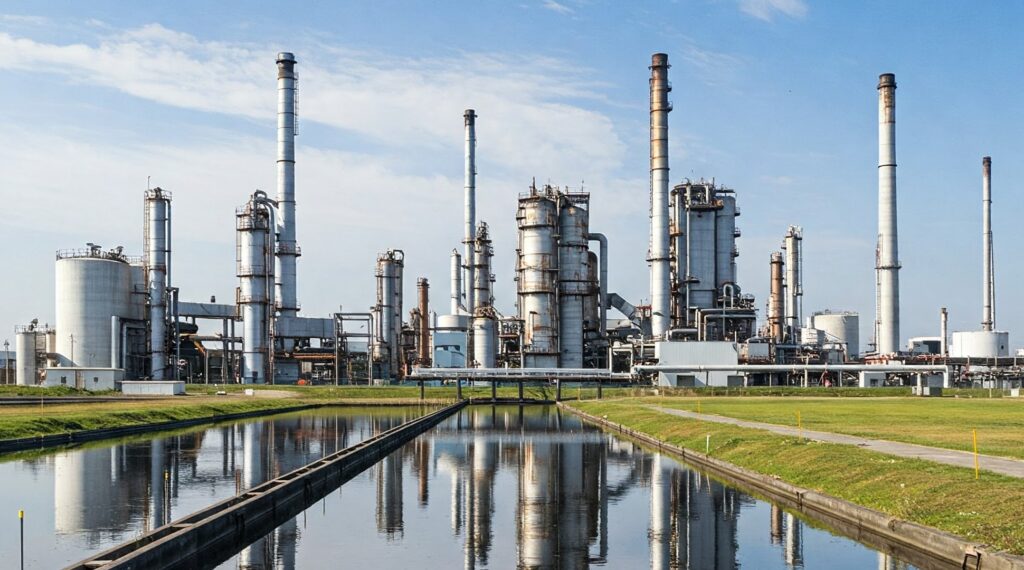

Cooling towers play a crucial role in managing heat in industrial and commercial operations. They rely on evaporative cooling, where a portion of the circulating water evaporates to remove heat. But this process also leads to high water consumption.
To conserve water, many facilities focus on increasing their cycles of concentration (COC)—the ratio of dissolved solids in recirculating water versus makeup water. A higher COC means less frequent blowdown and lower freshwater use. For example, going from 3 to 6 cycles can reduce makeup water demand by about 20% and blowdown by nearly 50%.
However, pushing COC higher also brings risks—like scaling, corrosion, and biofouling. These issues limit how far a facility can go without advanced water treatment. Most plants resort to Reverse Osmosis (RO) or heavy chemical dosing to manage water quality, but these methods are energy-intensive and costly.
The challenge, then, is finding a way to safely reuse more water—without RO. That’s where SCALEBAN offers a game-changing solution.
Why Cooling Towers Waste So Much Water
Cooling towers lose water in three main ways—evaporation, blowdown, and drift. While evaporation is unavoidable, blowdown (the discharge of mineral-rich water) can be minimized with the right treatment. Unfortunately, most cooling towers operate at low cycles of concentration (COC), usually between 4 and 6. This means fresh water must be added frequently to dilute the rising salt content.
To control TDS (Total Dissolved Solids), industries often use RO to treat and reuse water. But RO systems reject 30–40% of the water they treat, use a lot of energy, and require frequent maintenance. This limits their efficiency and increases both CAPEX and OPEX.
Clearly, a better alternative is needed, one that allows maximum water saving in cooling tower systems without the heavy costs of traditional methods.
The Real Challenge: Scale, Corrosion & Biofouling
Why can’t we just keep reusing the same water in cooling towers? The answer lies in three key issues: scale, corrosion, and biofouling.
As water is reused, minerals like calcium and magnesium begin to concentrate. These lead to scaling, which clogs heat exchangers and reduces system efficiency. Corrosion damages internal parts, while biofouling (caused by microbial growth) affects performance and hygiene.
To control these, industries use chemicals or adopt water purification through RO. But both options bring long-term costs and complexities. What’s needed is a solution that prevents these issues at the source—so that water can be reused safely and efficiently.
Scaleban’s Non-Conventional Approach
Scaleban offers a breakthrough technology that solves the root problem. Instead of removing TDS like RO or evaporating water like MEE, Scaleban treats the water in a way that prevents scale, corrosion, and biofouling—even at high TDS levels.
This allows cooling towers to run at much higher COC—typically between 15 and 20, compared to the industry average of 4 – 6. As a result, blowdown is minimized, and water saving in cooling tower systems is maximized.
Even better, Scaleban requires no membranes, no high pressure, and no thermal processes. This means far lower energy use, reduced chemical consumption, and simpler maintenance.
Key Benefits of Using Scaleban for Water Saving in Cooling Towers
1. High COC Operation
By safely increasing cycles of concentration, SCALEBAN significantly reduces the amount of fresh water required for cooling. This directly cuts down on water bills and supports long-term conservation.
2. No RO or MEE Needed
Scaleban eliminates the need for traditional ZLD technologies. There’s no water rejection like in RO, and no energy-intensive evaporation like in MEE.
3. Handles High TDS Water
The system can operate efficiently even with TDS levels as high as 300,000 ppm. This opens the door to reuse almost all of the plant’s wastewater in cooling applications.
4. Lower CAPEX and OPEX
Scaleban reduces capital and operating costs by nearly 80% compared to RO or MEE systems. It also delivers a fast ROI, typically within 12–18 months.
5. Minimal Maintenance
Because the system prevents scale and corrosion, there’s less downtime, fewer chemical adjustments, and longer equipment life.
Who Can Benefit?
Scaleban’s solution is ideal for anyone involved in running or managing industrial utilities.
For facility managers, this technology provides a cost-effective way to reduce water usage without disrupting operations. It simplifies cooling tower management and lowers utility bills.
Sustainability officers benefit from measurable water savings, reduced energy use, and a more sustainable footprint. Scaleban supports compliance with water reuse regulations and contributes to global sustainability goals.
Plant engineers gain from a reliable system that doesn’t require intensive chemical treatment or complex troubleshooting. With fewer system failures and minimal maintenance, they can focus on improving performance rather than fixing recurring issues.
No matter the industry, be it manufacturing, data centers, chemicals, or energy—Scaleban makes it easier to achieve water saving in cooling tower systems, without the need for traditional water treatment setups.
Why It’s a Smarter, Future-Ready Choice
As regulations tighten and water stress increases, traditional approaches like RO and MEE will only become harder to justify. They consume more energy, require skilled operators, and still fail to deliver optimal water recovery.
Scaleban changes the game. Its non-conventional design aligns with the growing demand for sustainable, low-footprint technologies. It not only reduces dependency on freshwater but also helps organizations achieve their net-zero and ESG targets.
In today’s business environment, efficiency isn’t optional—it’s expected. Scaleban delivers both economic and environmental value in a single solution.
Final Thoughts
Water conservation in cooling towers is no longer just a technical choice—it’s a strategic one. RO systems may have been the go-to solution in the past, but they fall short in today’s landscape of rising costs and sustainability pressures.
Scaleban’s innovative approach provides a better way forward. By removing the need for RO and enabling high COC operation, it helps industries achieve maximum water saving in cooling tower systems with lower costs, lower energy, and better long-term reliability.